In short
- Shilajit is not a single substance with one fixed composition.
- Resin means resin; gummies and capsules describe other product forms.
- The weight of a whole product is not automatically the amount of shilajit.
- Check ingredients, product details and the batch report.
- A natural origin, traditional application or high percentage proves no health effect.
What does the name shilajit mean?
Shilajit and mumijo are names for the same type of complex natural material. The European Commission describes mumijo as a material with organic and mineral components and a variable composition. The document mentions, among other things, humic substances and fulvic acid. Shilajit is therefore not a separate substance for which every pot automatically has the same specification.
That variation explains why a general definition is insufficient for a purchasing decision. A description of the raw material answers the question of what shilajit is. You need product information to find out what is in a package offered. A seller must make it clear which recipe, content and documentation belong to his variant.
Therefore, start with the knowledge base on shilajit if you want to learn the concepts. Then go to the product details. This way you keep background information and verifiable information about a specific packaging separate.
Is resin the same as shilajit resin?
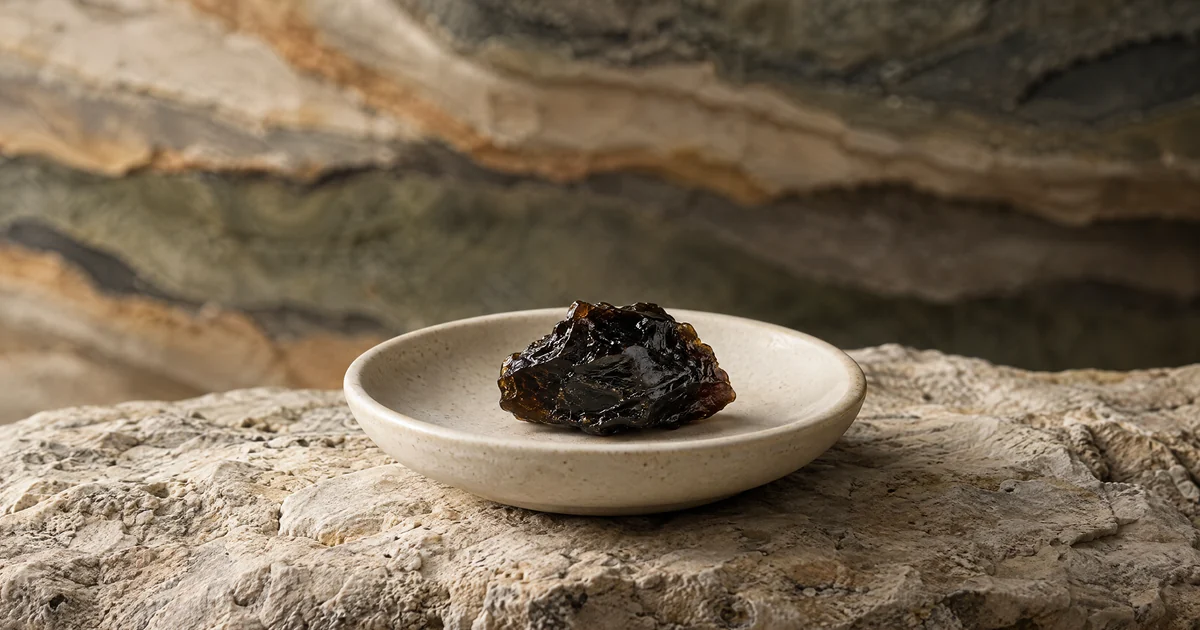
Resin is the English word for resin. With shilajit, that name describes a product form, not a separate quality level. A pot with the word resin is therefore not automatically better researched than a pot with resin on it.
Names such as pure, premium or original also do not complete an ingredients list. Ask what the provider means by such a word. Does it relate to the recipe, the processing or just the name of the variant? Then find the data that allows you to verify that explanation.
The color, shine or consistency in a photo can help you understand the presentation of a product. You cannot deduce a reliable composition or absence of contaminants from it. A nice image is not a measurement result. For a substantive comparison, the guide to resin, gummies and capsules refers to the data that is relevant per form.
What is in a gummy or capsule?
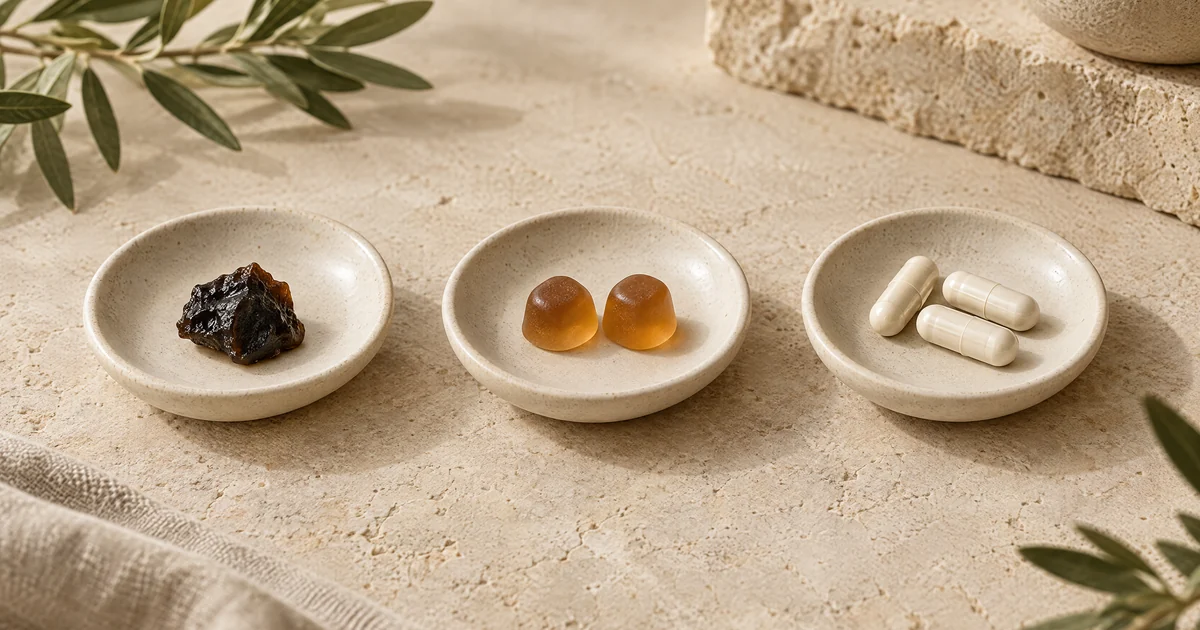
Gummies and capsules are ways to offer a supplement. They may contain other ingredients besides shilajit. What these are and how much shilajit is present must be apparent from the specification of the end product.
A gummy has a total weight. That total may consist of the intended ingredient plus the other recipe. Anyone who equates the weight of a gummy with the amount of shilajit may be comparing different things. The same point of attention applies to a capsule: the number of capsules says nothing about the content without additional information.
When making a comparison, always record three separate pieces of information: the total contents of the package, the quantity of the ingredient in question and the unit to which that quantity refers. Is a quantity indicated per piece, per gram or per specified portion? Only use a conversion when the information is clear. The explanation of shilajit gummies elaborates on this further.
What is the difference between material, product and batch?
Material, product and batch describe three different levels. By viewing them separately, you can see more quickly what information is missing.
- The material is the raw material that is the subject of a general description or background source.
- The product is the specific recipe and packaging that a provider puts together.
- The batch is a defined lot to which production data and an examination of a sample can be linked.
A publication about the raw material does not say which party a seller supplies. Nor does a sample report automatically say anything about each subsequent batch. Therefore, look for a connection between the packaging and the document: product name, batch number and a recognizable sample description.
With a composite recipe, the material examined is also relevant. Has only the raw material been examined, or the end product that you receive? Both documents can provide information, but they do not answer exactly the same question. The reading guide for certificates of analysis helps you to systematically view the identification and measurement data.
What does a percentage of fulvic acid tell?
A percentage can only be assessed if it is clear what has been measured and to what it relates. Ask whether the figure comes from a product specification, a general raw material description or a measurement of the batch offered. For a measurement result, also look for the method and unit used.
A high number is not an independent quality assessment. Without further information, it does not tell what other ingredients are present, what contaminants have been examined or how the complete product is composed. Two percentages on web pages are also not automatically comparable if the basis for the measurement is missing.
Therefore, use a percentage as a reason for a specific question: which document substantiates this number for this variant? An answer that only repeats the product name does not provide any new information. The shilajit buying guide lists these questions in the order in which you can check an offer.
What can you say about safety and operation?
The words natural and traditional in themselves do not provide assurance about safety or operation. For an assessment you need information that fits the specific product and the question you want to answer.
The NCCIH Fact Sheet on Ayurvedic Medicine, last updated January 2019, discusses limitations of the overall evidence and reports that some Ayurvedic preparations may contain lead, mercury or arsenic. That is not a finding that all shilajit is contaminated. Nor is it an analysis of any party shown on this website.
A batch report helps with the product parameters examined. A claim about a health effect requires a different substantiation. Separate these questions: what does the product contain, what was measured on the sample, and what effect is claimed? The explanation of research and evidence addresses that distinction.
The NVWA distinguishes between nutritional claims, health claims and medical claims. Medical claims on foodstuffs are prohibited; Conditions apply to health claims. Therefore, this guide does not provide dosage or advice on how to treat a health problem with shilajit. Discuss supplement use with a healthcare provider if you have medical questions, are taking medication or are pregnant.
What information do you check on the label?
The label is the starting point for understanding a final product. The NVWA requires honest and clear food information. A product description must match what you actually receive.
Read the information as a whole. Check the ingredients, net contents, usage information, warnings, storage information and the responsible provider. Then check whether the explanation on the product page describes the same product and content. Don't let a missing piece of information be filled in unnoticed with an attractive product name.
If in doubt, keep a photo or copy of the information on which you base your comparison. This way you can ask a specific question, for example about an ingredient that is shown in the image but not in the text. On the quality page you can read which documentation for this website still needs to be supplemented.
Frequently asked questions
Is shilajit a plant or a mineral?
Shilajit is described as a complex natural material with organic and mineral components. It is therefore not easy to equate it with one plant or one mineral. An ingredient list and product specification are required to assess a variant offered.
Is shilajit resin better than gummies?
The shape does not prove higher quality or better functioning. Compare the recipe, amount of shilajit and batch documentation of both products. Resin and gummies may differ in these respects. The comparison of product forms shows what data you need for this.
Is shilajit allowed for any food in Europe?
No. The European status assessment for mumijo distinguishes between use as or in food supplements and other food uses. The document calls the material non-novel for supplement use and novel for other foods. This demarcation is not an endorsement of every recipe or brand.
Can I recognize the quality at home by color or solubility?
An at-home observation does not replace an ingredient list or laboratory report. Color or behavior in water does not indicate which parameters were measured in a batch. Ask for the report of the delivered batch and check the connection with the packaging.
How this explanation is put together
This explanation is based on desk research in the primary sources mentioned, consulted on October 12, 2026. No product testing, laboratory research or user research was conducted for this article. The practical questions help to read documents; they do not constitute a certification or medical opinion.
The confirmed range on this website consists of Resin 50 grams, Pure 50 grams, Gummies and Complex. Recipes, levels, quantities for Gummies and Complex and usage instructions have not yet been definitively confirmed. Prices shown are demo information, sales are disabled and batch documentation is not yet available.
Use this guide to first understand the concepts and then query missing data. For a concrete comparison, the checklist for purchasing shilajit is the next step. You can ask questions about information on this website via the service page.
Sources & background
Sources are linked to the relevant explanations in this article. They do not support any approval or effect claim for Select. Our own selection criteria are separate from this.
European Commission: status assessment mumijo ↗NCCIH: Ayurvedic Medicine: In Depth ↗NVWA: honest and clear information on the label ↗NVWA: nutritional claims and health claims ↗